Table of Contents

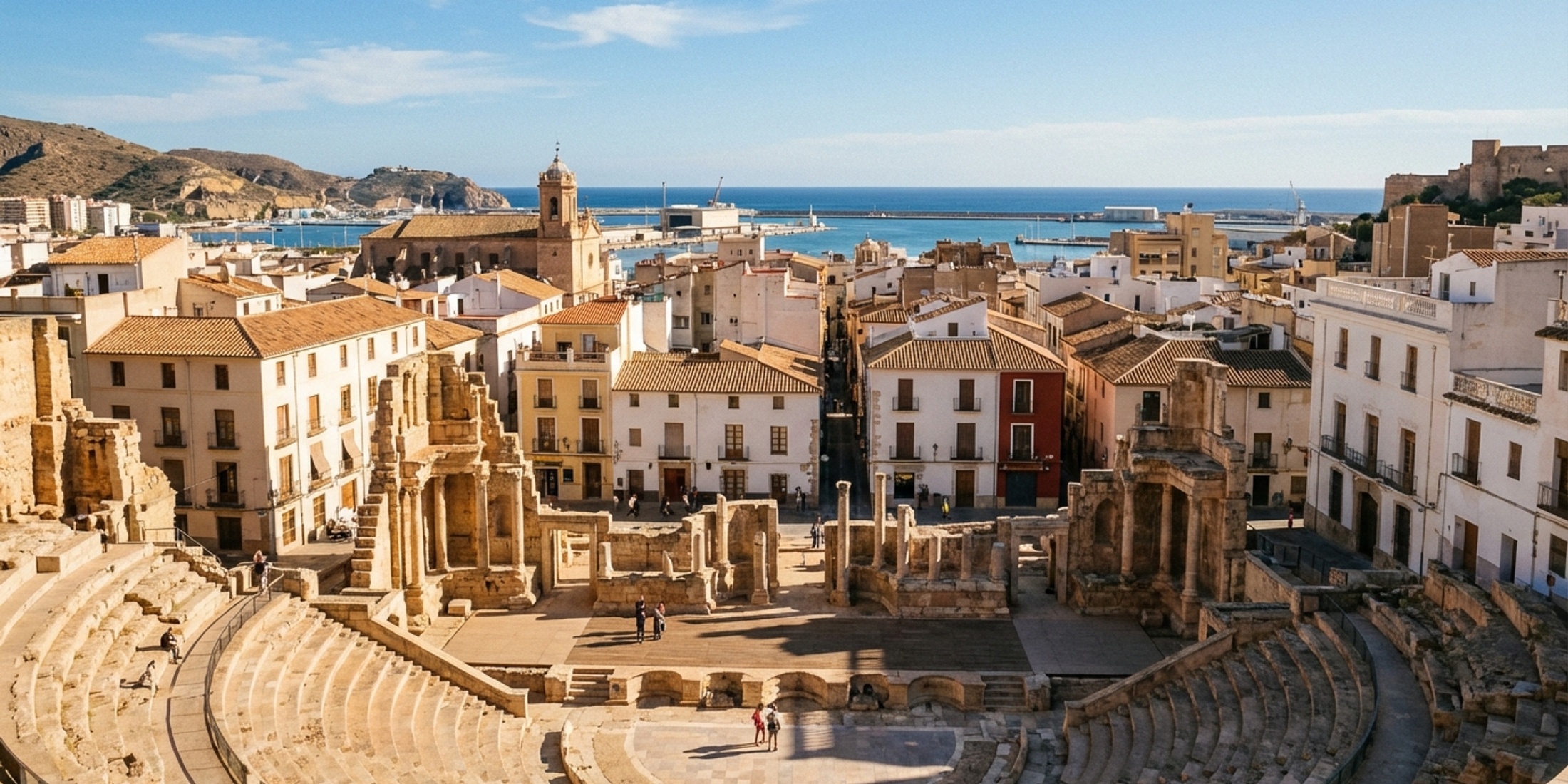
For decades, international buyers focused their attention primarily on the beachfront villas of the Costa Blanca or the rustic fincas of the interior. However, a significant shift is occurring among sophisticated investors who value culture, architecture, and year-round urban living. Cartagena, a port city with over 3,000 years of history, has emerged as the focal point of this trend. Often compared to a smaller, more accessible Barcelona, Cartagena offers a density of historic architecture that is rare even in a country as rich in heritage as Spain.
Investing in historic homes here is not merely a purchase of square footage; it is the acquisition of a piece of European history. From the foundations of the Carthaginians to the explosion of wealth during the 19th-century mining boom, the city's real estate inventory is diverse, complex, and highly appreciating.
The Architectural Landscape: Modernismo and Beyond
To understand the value proposition of Cartagena, one must understand its architecture. The city experienced a profound economic boom in the late 19th and early 20th centuries due to the mining industry in the nearby sierra. The wealthy bourgeoisie commissioned renowned architects—often disciples of Gaudí—to build opulent residences. This resulted in a condensed city center filled with Art Nouveau (Modernismo) buildings.
Key characteristics of these investment properties include:
- High Ceilings & French Windows: Most historic apartments feature ceiling heights exceeding 3.5 meters, often with original decorative moldings.
- Nolla Mosaic Flooring: Original encaustic geometric tiles are highly prized and significantly increase property value.
- Miradores: The distinctive enclosed glass balconies that define the Cartagena streetscape, providing light and thermal regulation.

Why Invest in Cartagena Now?
While cities like Valencia and Malaga have seen property prices skyrocket, Cartagena remains undervalued despite offering a comparable quality of life. The entry price for renovation projects in the Casco Antiguo (Old Town) allows for a healthy margin, provided the investor navigates the renovation costs correctly.
Infrastructure and Connectivity
The arrival of the AVE high-speed train is imminent, which will connect Cartagena directly to Madrid in under three hours. Historically, the introduction of high-speed rail in Spanish cities correlates with a 15-20% increase in real estate values within the first three years of operation. Furthermore, the city is aggressively pedestrianizing the center, reducing noise pollution and increasing the value of street-facing properties.
Navigating Heritage Protections
Buying a historic home is not without its challenges. Cartagena takes the preservation of its skyline seriously. Many buildings in the center are classified as BIC (Bien de Interés Cultural) or have varying levels of environmental protection.
For the investor, this means distinct rules apply:
- Facade Preservation: You generally cannot alter the exterior appearance. This includes the color of the shutters and the type of glass used in the miradores.
- Internal Layouts: While internal walls can often be moved, load-bearing structures in these older buildings require specialized architectural surveys.
- Archaeology: In the deeper layers of the Old Town, extensive ground excavation for new foundations or elevators may trigger an archaeological survey requirement, given the Roman ruins beneath the city.
We strongly advise working with a local architect specializing in 'rehabilitación' (restoration) before signing a deposit contract.
Prime Locations: Where to Buy
The historic center is compact, yet pricing and vibe vary significantly from street to street.
Calle Mayor & Plaza San Francisco
This is the 'Golden Mile' of Cartagena. Properties here command the highest prices per square meter. The inventory consists of large apartments (150m²+) in prestigious buildings. This area is fully pedestrianized and hosts the city's best cafes and boutiques. It is the safest bet for capital preservation and high-end long-term rentals.
The Port Area (Paseo Alfonso XII)
Facing the marina and the National Museum of Underwater Archaeology, these properties offer sea views and southern orientation. They are highly sought after by international retirees. However, noise from local festivals and port traffic should be considered.

Santa Lucia and The University District
For the investor seeking higher yields and growth potential, the areas bordering the University and the Santa Lucia fishing district are up-and-coming. Prices here are significantly lower, and the rental market is buoyant due to student demand and the influx of digital nomads seeking affordable, authentic Spanish living.
Financial Analysis: ROI and Costs
When calculating your Return on Investment in Cartagena, factor in a higher renovation budget than for a standard build. A high-quality restoration of a historic apartment can cost between €800 and €1,200 per square meter, depending on the state of the structural elements.
However, the rental yields for short-term holiday lets (where licenses are permitted) can reach 6-8% gross, owing to Cartagena's year-round tourism appeal driven by cruise ships and cultural festivals like 'Carthagineses y Romanos'. Long-term rentals typically yield between 4-5%, but with greater stability and less management overhead.
Conclusion
Cartagena offers a proposition that is increasingly difficult to find in Southern Europe: an authentic, walkable, historic city on the coast with property prices that have not yet peaked. Whether you are looking for a lifestyle purchase to enjoy the mild winters or a strategic renovation project, the city's historic housing stock provides a solid asset class.
The key to success lies in patience during the permit phase and a respect for the architectural integrity of the building. For those willing to embrace the history, the rewards are exceptional.