
For decades, the Region of Murcia lived in the shadow of its northern neighbor, the Costa Blanca. It was often viewed merely as the 'budget-friendly' alternative for those priced out of Alicante or Marbella. However, as we approach 2026, this narrative has fundamentally shifted. The Costa Cálida has transformed from a secondary option into a primary destination for discerning Northern European buyers, particularly from the Netherlands, Belgium, and the UK.
The 2026 outlook for Murcia is defined by maturity. The infrastructure projects promised a decade ago are now fully operational, the housing stock has been modernized, and the region's commitment to sustainable tourism is paying dividends. For investors, the window of opportunity is wide open: prices are still significantly lower than the national coastal average, but the upward trajectory is clear and stable.
The Economic Case: Value Gap Analysis
When analyzing the investment potential for 2026, the most compelling metric remains the price-per-square-meter disparity between the Costa Cálida and competing coastlines. While prime locations in the Costa del Sol often exceed €3,500 per square meter, and the Costa Blanca North pushes past €3,000, high-quality inventory in Murcia remains accessible.
Current market data suggests that premium new-build apartments in desirable areas like Los Alcázares or Santiago de la Ribera are trading at prices 30-40% lower than comparable properties 50 kilometers north. This 'Value Gap' acts as a safety buffer for investors, offering significant room for capital appreciation as the market corrects itself over the coming years.
Yield Potential vs. Capital Appreciation
In 2026, we anticipate a split focus for investors. For those seeking immediate cash flow, the long-term rental market in cities like Cartagena and Murcia capital is undersupplied, driving yields up to 5-6%. Conversely, the vacation rental market in coastal zones benefits from Murcia's extended season—boasting 320 days of sunshine—allowing for a longer occupancy window than the stormier northern coasts of Spain.

Infrastructure: The Connectivity Revolution
The accessibility of the Costa Cálida has historically been a bottleneck, but this has been emphatically resolved. The Region of Murcia International Airport (RMU) at Corvera has expanded its flight roster significantly. By 2026, we expect even greater connectivity with major hubs in the Netherlands and Scandinavia, facilitating the 'commuter' lifestyle for semi-retired buyers.
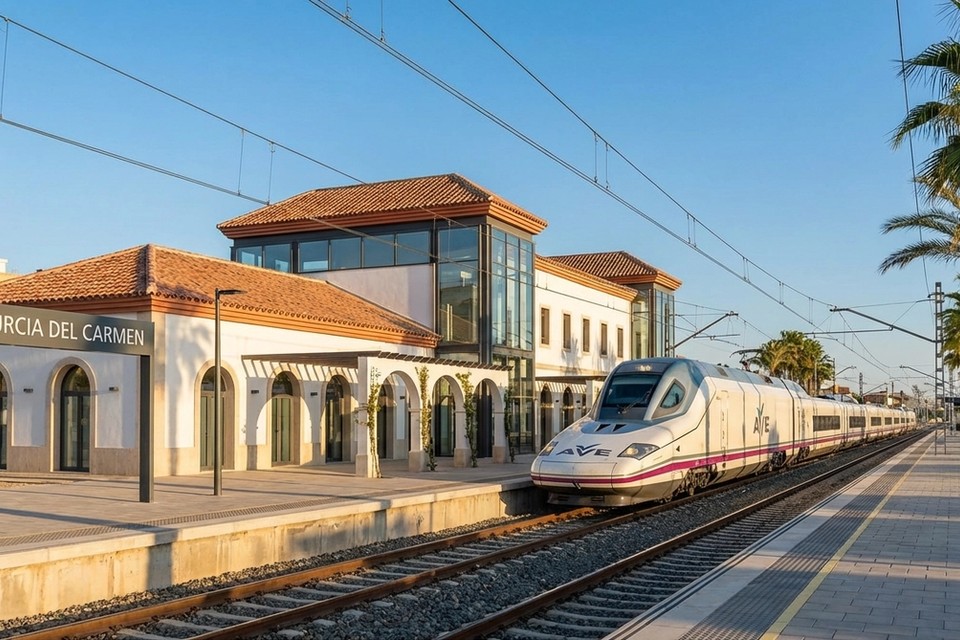
Furthermore, the arrival of the AVE (High-Speed Train) to Murcia has integrated the region into the national network. The ability to reach Madrid in under three hours has made the Costa Cálida a viable second-home destination for affluent Madrileños, adding a layer of domestic demand that stabilizes the market against international fluctuations.
Key Micro-Markets to Watch in 2026
The Costa Cálida is not a monolith; it is a collection of distinct micro-markets, each offering different advantages. For the 2026 cycle, three areas stand out:
- The Mar Menor Corridor: Towns like San Pedro del Pinatar and Lo Pagán are seeing a renaissance. Regeneration projects and promenade upgrades have revitalized these areas, making them prime spots for buyers seeking health and wellness lifestyles near the mud baths.
- Cartagena and Surroundings: This historic port city is undergoing gentrification similar to what Málaga experienced a decade ago. Buying renovated apartments in the historic center or new builds in the expanding periphery offers a blend of urban culture and coastal access.
- Águilas and the South: For those seeking the 'untouched' Spain, Águilas offers dramatic coastlines and lower density. It is less developed than the north but is tipped for higher appreciation rates as inventory in the north tightens.
The Golf Resort Renaissance
Murcia is frequently referred to as the 'Arizona of Europe' due to its arid climate and high concentration of golf courses. The GNK Golf Circuit and the famous La Manga Club remain prestigious, but 2026 sees a resurgence in resorts that faced difficulties during the 2008 crisis. Resorts like Condado de Alhama and Hacienda del Álamo are seeing heavy investment in new facilities and modern housing stock.
Property on these resorts offers excellent security, maintained infrastructure, and a ready-made community for international buyers. For investors, the year-round golf tourism ensures rental occupancy during the traditional 'low season' months of November through March.

Construction Trends: Sustainability as Standard
A defining feature of the 2026 market is the quality of construction. Gone are the days of rapid, low-quality builds. The new technical building code (Código Técnico de la Edificación) in Spain is rigorous. Developers in Costa Cálida are increasingly focusing on:
- Passive House Standards: High insulation and thermal efficiency to reduce cooling costs in summer.
- Smart Home Integration: Remote control of climate and security, essential for non-resident owners.
- Eco-friendly Materials: A response to the environmentally conscious Northern European buyer demographic.
Conclusion: The Smart Money is on Murcia
The Costa Cálida in 2026 represents a sweet spot in the Mediterranean property cycle. It has moved past the volatility of emerging markets but has not yet reached the price saturation of established hotspots. For the Dutch and English buyer, it offers a lifestyle upgrade that is financially sustainable.
Whether you are looking for a high-yield golf apartment, a retirement villa near the Mar Menor, or a city-break pad in Cartagena, the data points to Murcia as the rising star of Spanish real estate. The question is no longer 'Why Murcia?', but rather 'Where in Murcia?'