Table of Contents

For international buyers looking to purchase property in Spain, the debate between buying a new build (Obra Nueva) versus a resale property (Segunda Mano) has never been more relevant. In 2026, the decision is no longer just about aesthetic preference; it involves complex considerations regarding energy efficiency compliance, distinct tax implications, and long-term asset value.
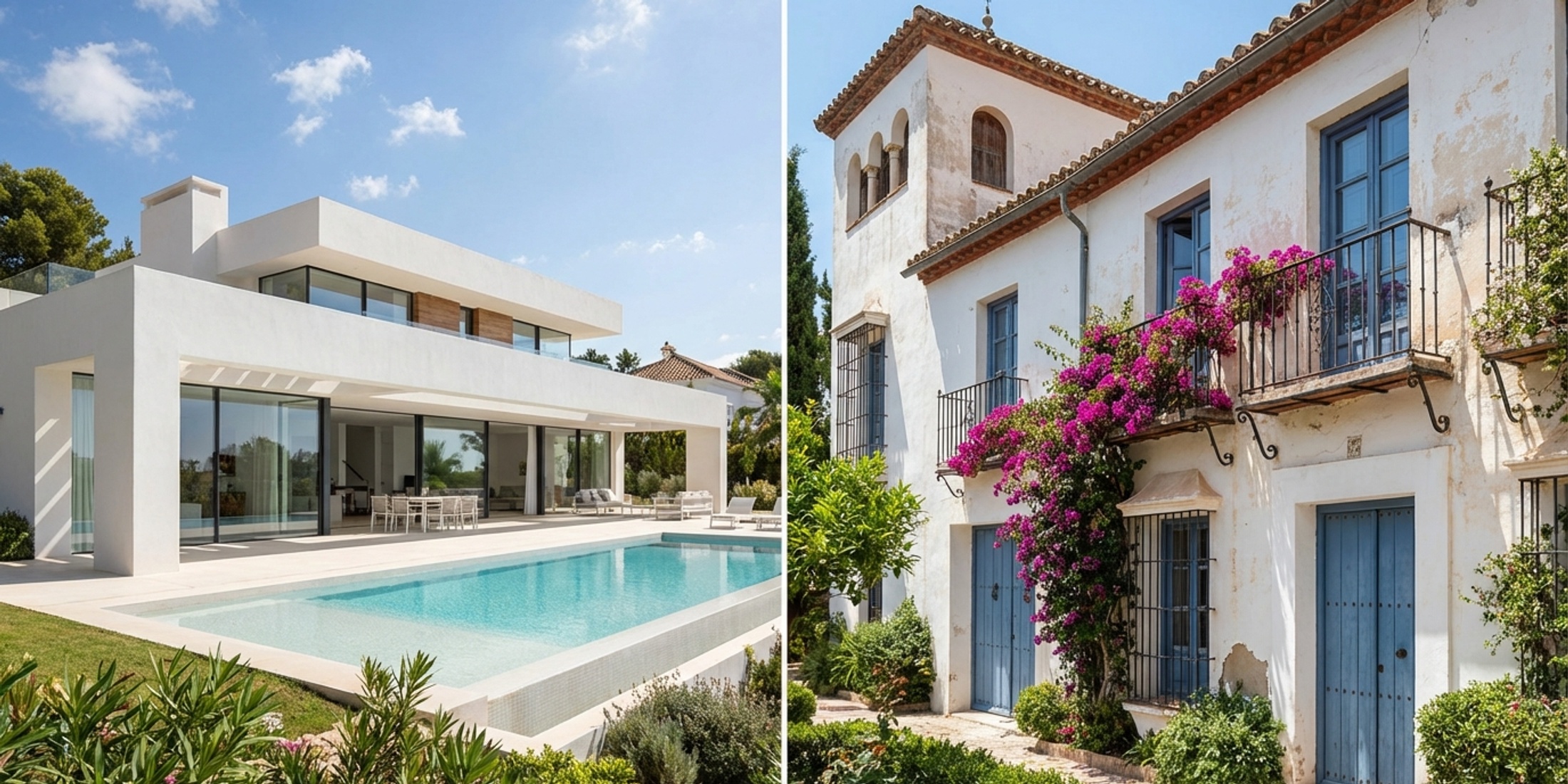
While resale homes offer character and prime locations in established neighborhoods, new builds provide future-proof engineering and strict adherence to the latest EU building codes. Below, we break down the critical differences to help you navigate the Spanish market this year.
The 2026 Market Context: Why It Matters
The Spanish real estate market has matured significantly over the last decade. In 2026, the primary driver for market differentiation is sustainability. With the implementation of stricter European Union energy directives, older properties are coming under scrutiny regarding their Energy Performance Certificates (EPC). This has created a two-tier market where energy-efficient homes command a premium, while older stock requires capital expenditure to meet modern standards.
The Case for New Build (Obra Nueva)
Buying a new build in Spain, whether off-plan or key-ready, appeals to buyers seeking a hassle-free transition and modern luxury. In regions like the Costa del Sol and Costa Blanca, developers are prioritizing open-plan living and smart-home integration.

Advantages of New Builds
- Energy Efficiency: New constructions in 2026 almost universally hold an Energy Rating of A or B, resulting in significantly lower utility bills and future asset protection.
- Warranties: Under the LOE (Ley de Ordenación de la Edificación), you are protected by a 10-year structural guarantee, a 3-year guarantee on habitability, and a 1-year guarantee on finishes.
- Customization: Buying off-plan allows you to influence the layout and finishings, tailoring the property to your specific tastes before construction is complete.
Disadvantages of New Builds
- Price Premium: You pay for the privilege of being the first owner. New builds are generally 15-20% more expensive than comparable resale properties.
- Location Scarcity: Prime, central locations in historic towns are often fully developed. New builds are frequently located on the outskirts or in developing urbanizations.
The Case for Resale (Segunda Mano)
Resale properties represent the vast majority of the Spanish market. For those looking for authentic Spanish architecture, proximity to town centers, or immediate move-in availability, this is often the preferred route.
Advantages of Resale
- Prime Locations: Resale properties hold the best spots—frontline beach positions and historic city centers that cannot be replicated.
- Immediate Availability: There is no waiting for construction to finish. You can complete the purchase and move in within 4-6 weeks in many cases.
- Mature Infrastructure: You are buying into an established community with finished roads, mature gardens, and operational shops and restaurants.
Disadvantages of Resale
- Renovation Risks: Older properties may hide plumbing or electrical issues. In 2026, buyers must also consider the cost of retrofitting to improve energy ratings.
- Maintenance Costs: Older communities often have higher maintenance requirements for communal areas and pools compared to modern, efficient designs.

Financial Breakdown: Taxes and Costs
One of the most confusing aspects for international buyers is the difference in taxation between the two property types. This can significantly impact your final budget.
Taxes on New Build
New properties are subject to VAT (IVA) rather than Transfer Tax. As of 2026, the standard IVA on residential property remains at 10%. Additionally, you must pay Stamp Duty (AJD), which varies by region but typically ranges between 1% and 1.5%.
Taxes on Resale
Resale properties are subject to Property Transfer Tax (ITP). This is a regional tax and varies significantly. For example, in the Valencian Community, it is 10%, while in Andalusia, it is currently fixed at 7%. There is no VAT or Stamp Duty on resale homes.
Investment Analysis: Which Yields Better ROI?
From an investment perspective, the data for 2026 suggests a divergence in strategy:
- Capital Appreciation: New builds tend to appreciate faster in the first 5 years post-completion, particularly as the surrounding infrastructure of a new urbanization matures.
- Rental Yields: Resale properties in city centers often generate higher short-term rental yields due to their prime locations. However, new builds with 'tourist license' pre-approvals are becoming highly sought after for their lower maintenance costs for landlords.
Conclusion: Choosing What fits Your Lifestyle
Ultimately, the choice between new build and resale in Spain in 2026 depends on your tolerance for renovation, your desire for location versus modernity, and your timeline.
- Choose New Build if: You prioritize energy efficiency, want zero maintenance for the next decade, and prefer a modern, open-plan aesthetic.
- Choose Resale if: You want to be in the heart of the action, appreciate traditional character, and are willing to invest in renovations to increase the property's value.