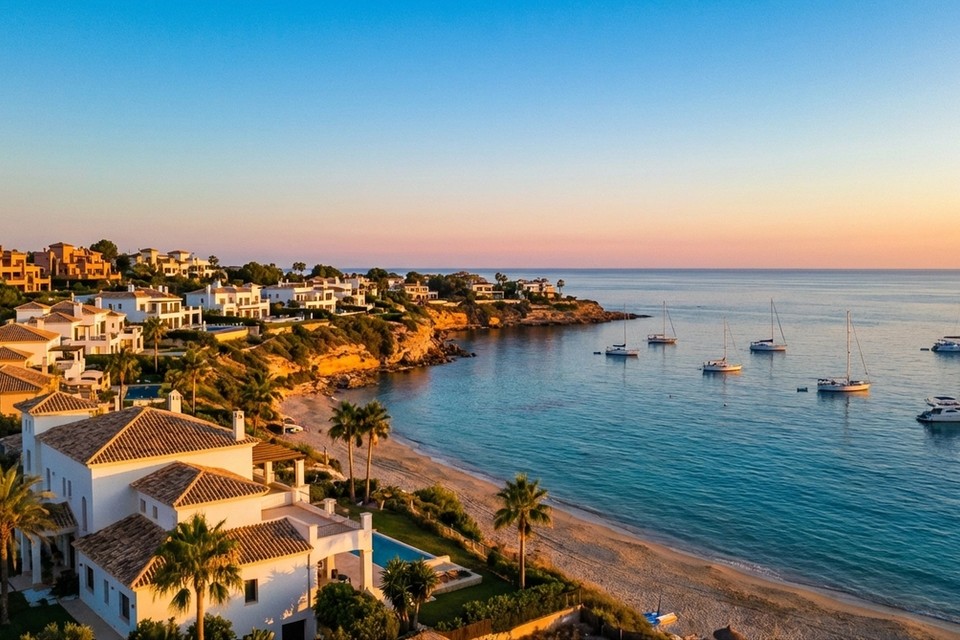

For decades, the Costa Cálida was often overshadowed by its northern neighbor, the Costa Blanca, primarily due to differences in accessibility. However, the last five years have marked a definitive turning point for the Region of Murcia. The narrative has shifted from "remote rustic charm" to "connected modern luxury."
Real estate value is inextricably linked to infrastructure. The formula is simple: improved accessibility leads to increased tourism and commerce, which in turn drives demand for housing—both for holiday rentals and permanent residency. For Dutch, British, and Belgian buyers, the ease of travel is often the deciding factor between two comparable properties.
In this analysis, we examine the major infrastructure pillars supporting Murcia’s property market and project how these developments will sustain capital appreciation in the coming years.
The Corvera Airport (RMU) Effect
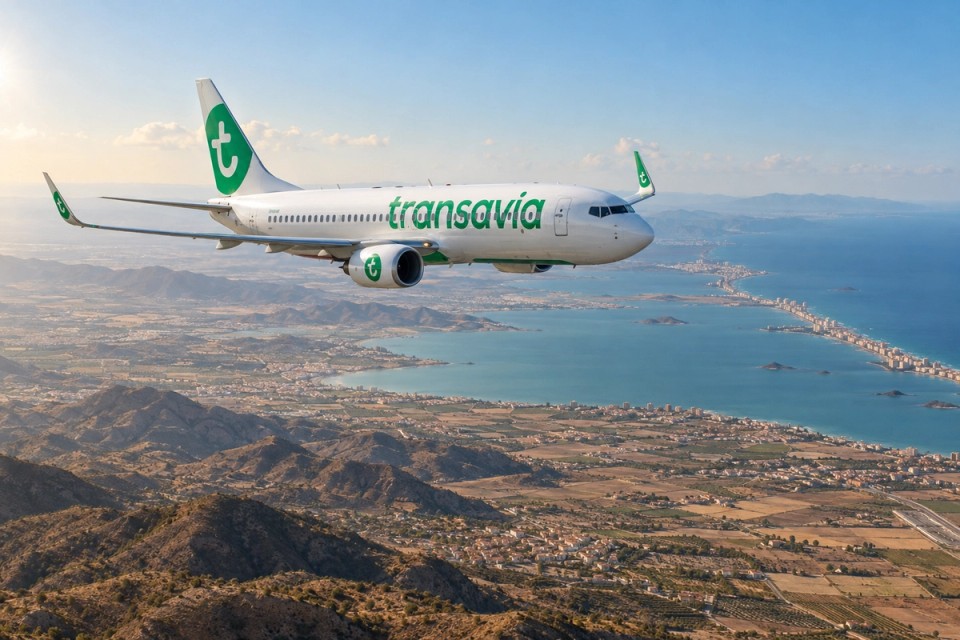
The opening of the Region of Murcia International Airport (RMU) in Corvera replaced the military-shared airstrip at San Javier with a state-of-the-art commercial facility. While the transition faced initial teething issues, the long-term strategic value of RMU is undeniable.
Strategic Location and Capacity
Located inland, RMU is equidistant from the region's major attractions. It sits roughly 25 minutes from Murcia City, 30 minutes from the beaches of the Mar Menor, and 30 minutes from Cartagena. This centrality allows it to serve the entire region effectively, rather than just the coastal strip.
Critically for property owners, the airport continues to expand its route map. Key connections include:
- Direct flights to major UK hubs (London Gatwick, Manchester, Birmingham).
- Seasonal and regular connections to Belgium (Antwerp, Charleroi).
- Growing connectivity with Ireland and other Northern European nations.

The AVE High-Speed Rail: A Game Changer
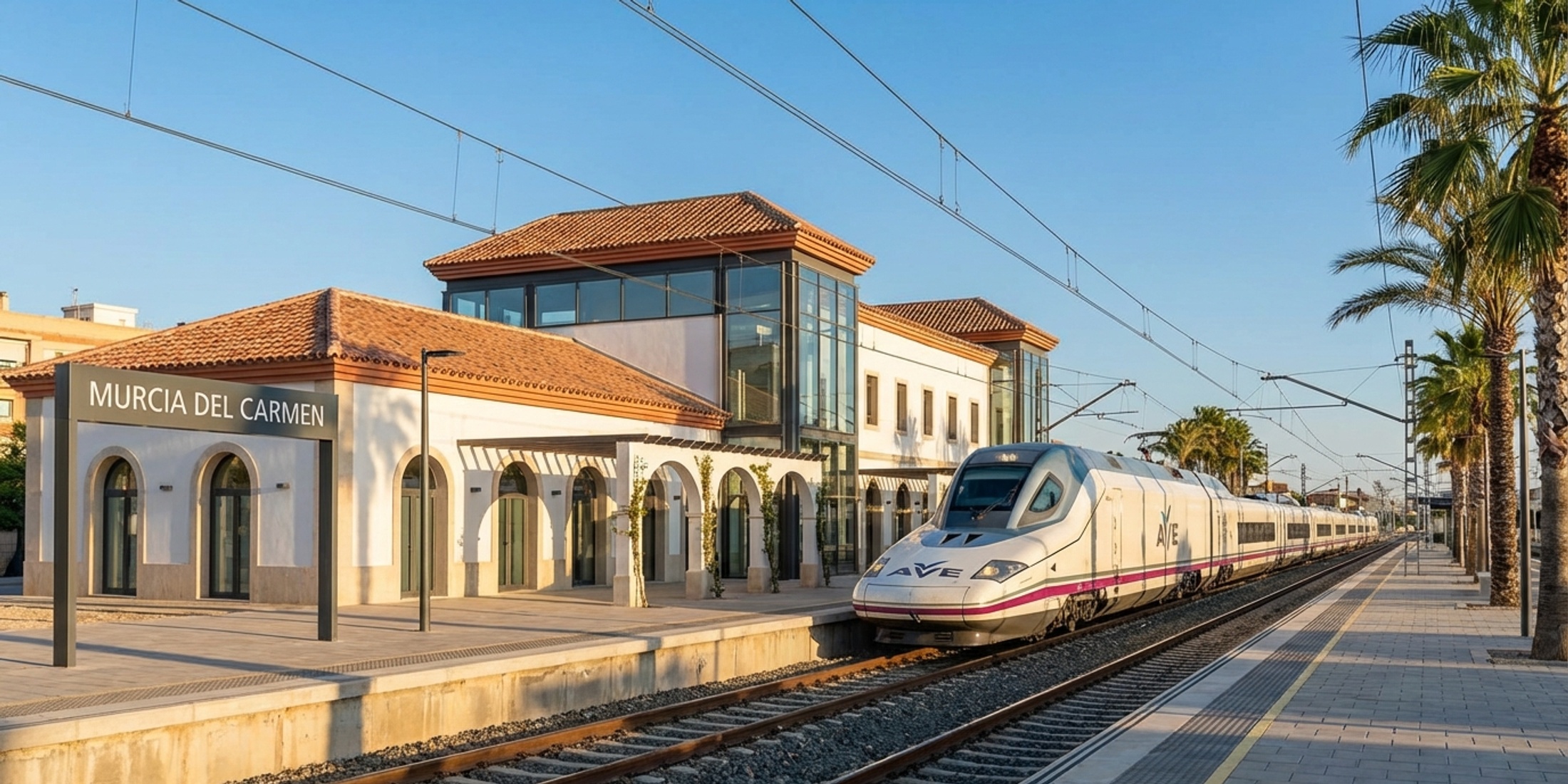
Perhaps the most significant infrastructure milestone in recent history was the arrival of the AVE (Alta Velocidad Española) in Murcia City. This integration into Spain’s high-speed rail network has fundamentally altered the demographic of potential buyers in the region.
The AVE link connects Murcia del Carmen station to Madrid’s Atocha station in approximately 2 hours and 45 minutes. This drastic reduction in travel time has two major impacts on real estate:
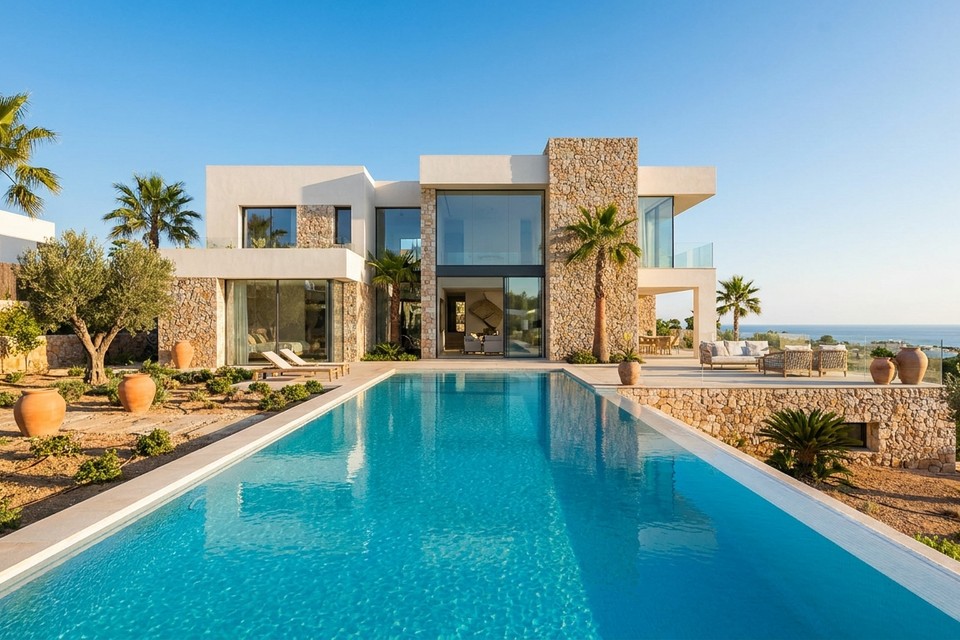
- The 'Madrid Effect': Madrileños are increasingly buying second homes in Murcia, driving domestic demand for luxury apartments and coastal villas.
- International Dual-City Living: Foreign investors can now easily combine a city break in Madrid with a beach holiday in Murcia without navigating airports or long drives.
Furthermore, the ongoing extension of the line to Almería and the eventual completion of the 'Mediterranean Corridor' will link Murcia directly to Valencia and Barcelona by high-speed rail, creating a seamless economic corridor along the east coast.
Road Networks: The Arteries of Value
While trains and planes grab headlines, the quality of the road network is what dictates the day-to-day lifestyle of a resident. Murcia boasts some of the newest and least congested highways in Spain, particularly compared to the heavy traffic often found in Málaga or Alicante.
Key Highway Upgrades
The A-30 and the AP-7 toll-free sections provide rapid movement north-to-south and along the coast. Recent improvements have focused on connecting the inland golf resorts—such as Santa Rosalía Lake and Life Resort and Roda Golf—directly to the coastal towns of Los Alcázares and Santiago de la Ribera.
This "10-minute connectivity"—where a property is 10 minutes from the beach, the golf course, and the highway—is a sweet spot for valuation. Properties in these zones have seen steady appreciation because they offer the lifestyle convenience that Northern European buyers prioritize.
The Port of Cartagena and Urban Regeneration
Infrastructure is not limited to transport; it includes urban regeneration. Cartagena is the prime example of how public investment revitalizes property markets. The 'Plaza Mayor' project and the integration of the port into the city center have transformed Cartagena into a premium cultural destination.

With a booming cruise ship terminal bringing thousands of tourists daily, the demand for short-term rentals in the historic quarter has skyrocketed. Investors renovating older properties in Cartagena’s city center are seeing excellent yields, driven by the city's transformation from an industrial naval base to a Mediterranean tourism hotspot.
Strategic Investment Areas
Based on the infrastructure map, where should investors look? The data suggests three tiers of high-potential zones:
- Murcia City South: The areas surrounding the new AVE station (El Carmen) are undergoing gentrification. As the high-speed link solidifies, these neighborhoods are becoming highly desirable for commuters and professionals.
- The 'Golden Triangle' Golf Resorts: Resorts located between Murcia City and the Mar Menor (such as Mar Menor Golf, Santa Rosalía, and Hacienda del Álamo) benefit most from the RMU airport proximity.
- Lorca and the South-West: With the upcoming extension of the high-speed rail line toward Almería, the historic city of Lorca is poised for growth, offering a lower entry price point with significant upside potential.
Conclusion: A Solid Foundation for Growth
The Region of Murcia is no longer waiting for development; the infrastructure is already in place. The roads are built, the trains are running, and the airport is operational. For the real estate market, this signifies a move from speculative investment to solid, tangible value.
Buyers entering the market now are purchasing in a region that combines the charm of authentic Spain with the connectivity of a modern European hub. As flight routes expand and the Mediterranean Corridor nears completion, the pressure on property prices will likely continue to trend upward, making today a strategic moment for acquisition.