Table of Contents

For many international buyers, particularly those from the Netherlands, Belgium, and the UK, the decision to purchase property in Spain is driven by a singular, powerful motivator: the climate. While the entire Spanish Mediterranean coast offers an improvement over Northern Europe, the Costa Calida (Murcia Region) possesses a distinct meteorological profile that sets it apart. It is not merely about sunshine; it is about the quality of the air, the regulation of temperature, and the tangible health benefits that this specific microclimate provides.
The name itself—Costa Calida, or 'Warm Coast'—is not a marketing moniker but a climatological description. With average annual temperatures higher than neighboring regions and rainfall significantly lower, Murcia offers a compelling case for those seeking a permanent relocation for their retirement years.
The Science of the Murcian Microclimate
To understand why the Costa Calida is uniquely suited for retirement, one must look at the geography. The region acts as a natural basin. It is surrounded by mountain ranges—specifically the Carrascoy mountains and the Sierra Espuña—which act as a formidable shield against cold fronts moving down from the interior of the Iberian Peninsula.
This geographical protection results in a semi-arid Mediterranean climate. Unlike the more humid tropical feel of areas further south or the windier conditions often found on the Costa Brava, Murcia is characterized by dry heat. Humidity is generally low (outside of the immediate coastline in August), which makes high temperatures feel more manageable and the winters feel significantly warmer.

Health Benefits Recognized by the WHO
The World Health Organization (WHO) has previously identified the Murcia region as having one of the healthiest climates in the world. For retirees, this is more than a statistic; it is a lifestyle enabler. The combination of dry air, high salinity in the atmosphere (near the salt lakes), and consistent warmth offers relief for several chronic conditions.
Relief for Arthritis and Rheumatism
The most cited benefit by our clients is the impact on joint pain. The rapid drop in barometric pressure and damp cold common in Northern Europe are key aggregators for arthritis. In the Costa Calida, the atmospheric pressure is stable, and the air is dry.
Furthermore, the region is home to the San Pedro del Pinatar salt lakes. These natural mud baths are rich in calcium, magnesium, and potassium. Many residents incorporate 'thalassotherapy' (sea water therapy) into their weekly routine, using the mineral-rich mud to alleviate inflammation and skin conditions.
Seasonal Breakdown: What to Expect
Managing expectations is crucial for international buyers. While the climate is excellent, it is important to understand the seasonal rhythms of the region.
Winter (December - February)
Winter in Murcia is a revelation for those used to grey skies. Daytime highs frequently reach 18°C to 20°C. It is entirely normal to enjoy lunch on a terrace in January wearing just a light sweater or t-shirt. However, once the sun sets, temperatures drop rapidly to around 6°C to 8°C. A property with good insulation and heating is still necessary for the evenings.
Spring and Autumn (March - May, October - November)
These are the 'Golden Months.' Temperatures hover between 23°C and 28°C. This is the prime season for golf, hiking, and cycling. The region blooms, and the risk of rain is minimal, usually restricted to a few days in April or late October (known as the 'Gota Fría').
Summer (June - September)
It gets hot. July and August regularly see highs of 32°C to 36°C, occasionally spiking higher inland. The lifestyle shifts during these months: mornings are for activity, afternoons are for the traditional siesta (indoors with air conditioning), and evenings are for late dining as the air cools. The sea breeze near the Mar Menor provides essential natural cooling during these months.

The Impact on Lifestyle and Architecture
The climate dictates the lifestyle, and in the Costa Calida, life is lived outdoors. This has a profound effect on property design and daily routines for retirees.
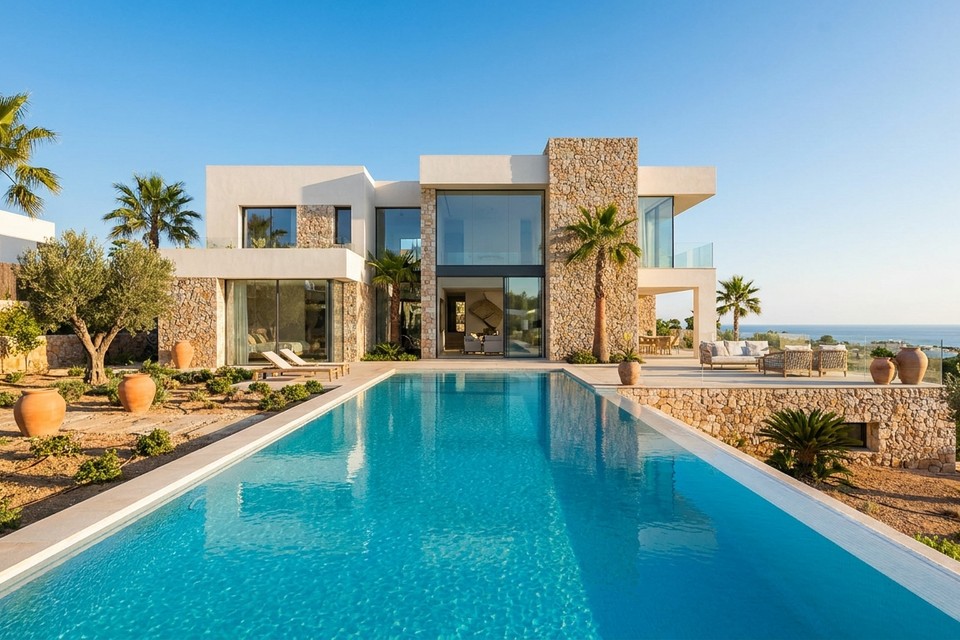
- Outdoor Living Spaces: In Murcia, the terrace is the most important room in the house. Modern villas are designed with 'indoor-outdoor' flow, where glass curtains allow the living room to merge with the pool area.
- Year-Round Activity: Unlike Northern Europe, where hobbies are seasonal, here you can maintain a consistent routine. The region is famous for the 'Jack Nicklaus Golf Trail,' offering six courses within a short radius that remain playable 12 months a year.
- Diet and Agriculture: Known as the 'Orchard of Europe' (La Huerta de Europa), the climate allows for the continuous harvest of fresh fruit and vegetables. Eating locally grown, sun-ripened produce is standard, contributing further to the health benefits of the region.
Costa Calida vs. Costa Blanca: The Climate Difference
Buyers often compare Murcia (Costa Calida) with Alicante (Costa Blanca South). While they are geographically close, the Costa Calida is often 2-3 degrees warmer in the winter and slightly drier. The waters of the Mar Menor—a shallow saltwater lagoon—also act as a thermal accumulator, keeping the immediate surrounding air temperature milder in winter compared to the open Mediterranean coast of the Costa Blanca.
Conclusion
Retiring to the Costa Calida is an investment in longevity. The region offers more than just sunshine; it provides a therapeutic environment verified by science and health organizations. Whether you are looking for a golf property, a coastal villa near the Mar Menor, or a country house in the warmer interior, the climate ensures that your retirement years are spent active, outdoors, and under blue skies.
If you are ready to explore the warmest winters in mainland Spain, contact our specialist team to view our portfolio of climate-optimized properties.