Table of Contents

The 2026 Spanish Market Landscape
The Spanish property market in 2026 is characterized by stability and modernization. Following the adjustments of the early 2020s, the current landscape offers a balanced environment for international investors. While demand in prime locations—such as the Costa del Sol, the Balearics, and Madrid—remains robust, the processes governing these transactions have evolved. Buyers today face stricter compliance regulations but benefit from increased transparency in the land registry and banking sectors.
For Dutch and English buyers, understanding the nuance between 'residency' and 'ownership' is paramount. Spain continues to welcome foreign capital, but the bureaucracy, while digitized, requires precise navigation. This guide outlines the definitive path to securing your asset.
Phase 1: Essential Preparation and Legalities
Before viewing properties, the foundation of your purchase must be laid. In Spain, administrative preparation is not a formality—it is a prerequisite.
Obtaining the NIE Number
The 'Número de Identificación de Extranjero' (NIE) is your all-purpose fiscal identification in Spain. You cannot buy property, pay taxes, or even contract utilities without it. In 2026, applications can often be initiated via consulates in your home country or processed digitally through a legal representative (Power of Attorney) in Spain, significantly reducing travel requirements.
Legal Representation
Unlike in the UK or Netherlands where notaries may handle much of the transaction, the Spanish 'Notario' ensures legality but does not protect your interests. You must appoint a specialized property lawyer ('Abogado') who speaks your language. They will conduct the crucial due diligence regarding debts on the property, urban planning legality, and ownership verification.
Phase 2: The Purchase Process
Once you have selected your ideal property, the transaction moves through three distinct stages. Understanding the financial commitment at each stage is vital for liquidity planning.
1. The Reservation Contract
To remove the property from the market, you will sign a 'Contrato de Reserva'. This usually requires a fee between €6,000 and €10,000. This deposit is generally held by the agency or your lawyer and is refundable if basic legal checks fail, subject to the specific terms drafted.
2. The 'Contrato de Arras' (Private Purchase Contract)
Within 2 to 3 weeks of reservation, the 'Contrato de Arras' is signed. This is where the deal becomes binding. You will typically pay 10% of the purchase price (minus the reservation fee). Under Spanish law (specifically 'Arras Penitenciales'), if you pull out, you lose this deposit. If the seller pulls out, they must return double the amount.
3. The Notary Signing (Escritura)
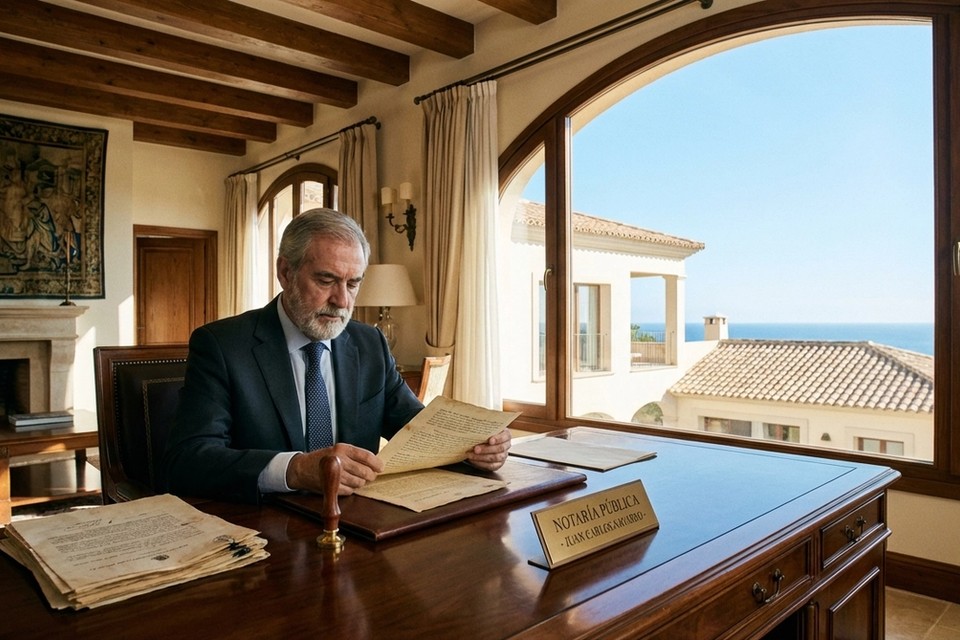
Completion takes place before a Public Notary. Both parties sign the 'Escritura de Compraventa' (Title Deed), and the remaining balance is paid, usually via a bank draft from a Spanish bank. Possession is handed over immediately.
Financial Planning: Taxes and Fees
A common oversight for international buyers is underestimating the closing costs. As a rule of thumb for 2026, you should budget between 10% and 13% of the purchase price on top of the property value.
- Property Transfer Tax (ITP): Applied to resale properties. Varies by region (e.g., 7% in Andalucia, 10% in Valencia/Catalonia).
- VAT (IVA) & Stamp Duty (AJD): Applied to new build properties. VAT is generally 10% (residential), plus 1.2% - 1.5% for Stamp Duty.
- Notary and Registry Fees: Fixed by law, typically ranging from €1,000 to €2,000 combined, depending on property value.
- Legal Fees: Usually 1% of the purchase price plus VAT.
Due Diligence: Avoiding Pitfalls
The role of your lawyer is critical in checking the 'Nota Simple' (land registry extract). In 2026, buyers must also be vigilant regarding energy efficiency certificates and tourist license compatibility if they intend to rent the property. Ensure there are no outstanding debts related to the IBI (Council Tax) or Community Fees, as these are attached to the property, not the owner.
Post-Purchase Essentials
Once you hold the keys, the administration continues. You must register your ownership with the Land Registry immediately—a step your lawyer will handle. Furthermore, setting up direct debits for utilities and the annual IBI tax is essential to avoid service interruptions or fines. For non-residents, remember the 'Imputed Income Tax' (Modelo 210), an annual tax based on the ratable value of the property, regardless of whether it is rented out.
Conclusion
Buying property in Spain in 2026 is a transparent and secure process if approached with the right professional support. The combination of digital efficiency and robust legal protection makes it an excellent time to invest. By following this guide and securing trusted legal and real estate partners, your transition to the Spanish lifestyle will be as rewarding as the destination itself.