Table of Contents

For decades, Malaga was often viewed merely as the gateway to the Costa del Sol—a place where one landed before heading west to Marbella or east to Nerja. However, the last fifteen years have witnessed a spectacular metamorphosis. Today, Malaga is not just a point of arrival; it is a destination in its own right, celebrated for its cosmopolitan atmosphere, historical depth, and distinctively Spanish charm.
For Northern Europeans considering a move, Malaga strikes a rare balance: it functions as a modern, connected European city while retaining the slow, social rhythm of traditional Andalusian life. Whether you are a retiree looking for winter sun or a digital nomad seeking a vibrant base, understanding the climate and culture is essential to integrating successfully.
The Climate Advantage: A Microclimate of Eternal Spring
The primary draw for most expats is, undeniably, the weather. However, describing it simply as "sunny" does a disservice to the unique geographical factors at play. Malaga enjoys a subtropical-Mediterranean climate, but it is the city's specific topography that creates its enviable conditions.
Protection from the North
The city is nestled at the foot of the Montes de Malaga mountain range. These mountains act as a natural barrier, shielding the coast from the cold northern winds that sweep across the Iberian Peninsula during winter. Consequently, while inland Spain might be freezing, Malaga often enjoys daytime highs of 16°C to 20°C in January.
Seasonal Breakdown
Living here means adjusting to a new rhythm of seasons, which differ significantly from the UK or the Netherlands:
- Winter (December–February): Mild and bright. This is the wettest season, but rain usually comes in short, heavy bursts rather than days of drizzle. It is prime time for golf and hiking.
- Spring (March–May): The city bursts into bloom. Temperatures rise to the mid-20s, and the beach clubs (chiringuitos) begin to fill up.
- Summer (June–September): Hot and dry. July and August can see temperatures exceed 30°C. Locals survive the heat by adopting the siesta lifestyle and dining late in the evening.
- Autumn (October–November): Often cited as the best season. The sea is still warm enough for swimming, but the intense summer heat has dissipated.

A Cultural Renaissance: The City of Museums
Ten years ago, Malaga was a cultural backwater compared to Seville or Granada. Today, it boasts one of the highest densities of museums per square kilometer in Europe. This was a deliberate strategy by the local government to reposition the city as a high-end cultural hub.
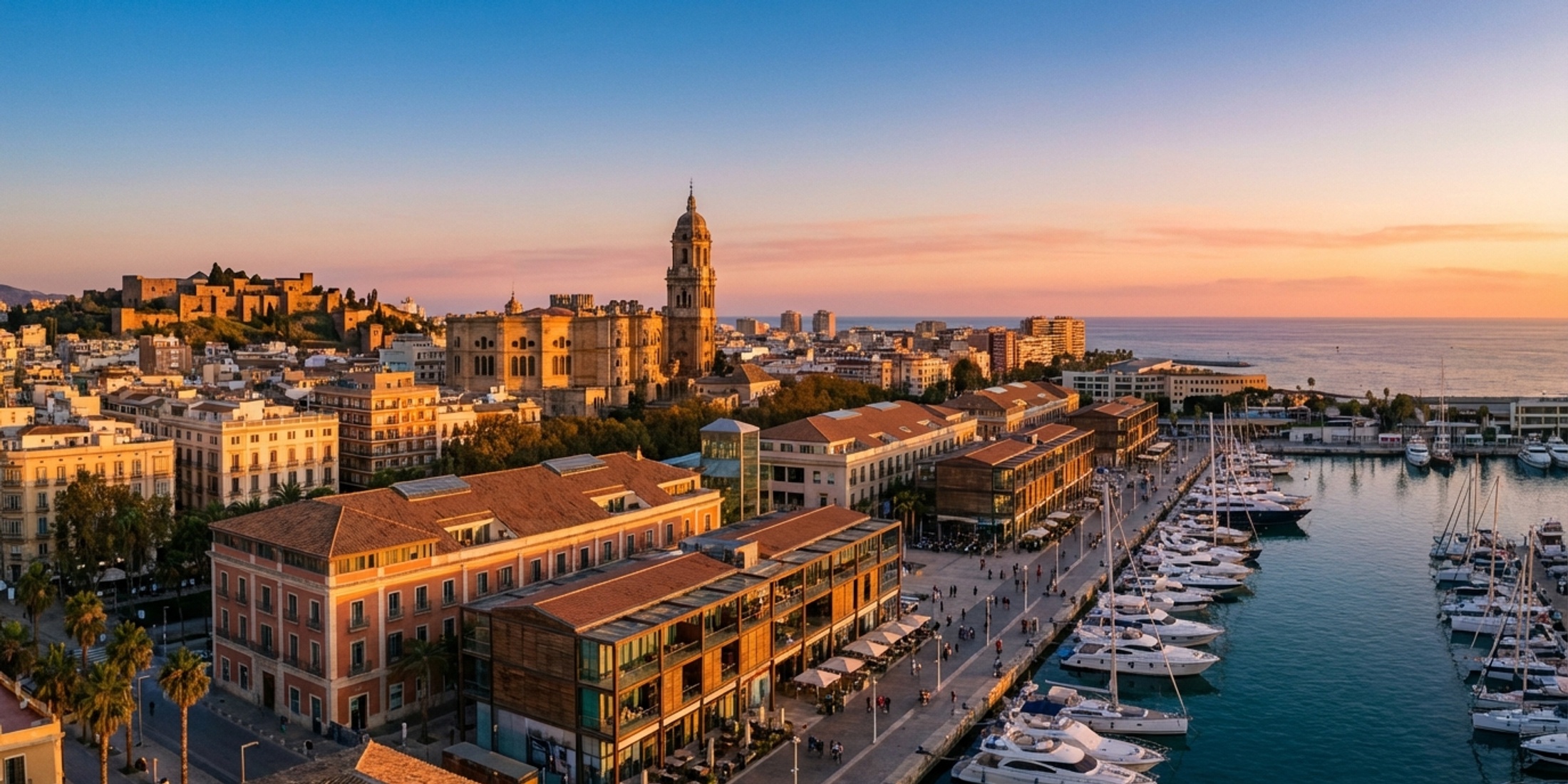
As the birthplace of Pablo Picasso, art is in the city’s DNA. The Picasso Museum, housed in the beautiful Buenavista Palace, is the crown jewel, but the list of institutions is exhaustive. The Centre Pompidou (the famous colorful cube in the port), the Carmen Thyssen Museum, and the Russian Museum offer world-class collections that rotate regularly.
For the expat, this means access to a level of high culture usually reserved for capital cities, but accessible within a walkable, pedestrian-friendly center. The Soho district, once a gritty area near the port, has been transformed into the 'Arts District,' covered in street art by world-renowned muralists like OBEY and D*Face.
The Gastronomy: Beyond Paella
While you can find excellent paella in Malaga, the local cuisine is distinct. The lifestyle revolves heavily around food, and understanding local dining habits is key to social integration.
The Espeto Tradition
The symbol of Malaga’s gastronomy is the 'espeto de sardinas'—sardines skewered on bamboo canes and cooked over an open fire in an old fishing boat filled with sand. This isn't just food; it's a ritual. Best enjoyed at a beachside chiringuito in the Pedregalejo or El Palo neighborhoods, ideally accompanied by a cold Victoria beer.
Market Life
For those living in the city, the Atarazanas Market is the heartbeat of daily life. Housed in a building that retains its original Moorish archway, the market is a sensory explosion of fresh fish, local olives, and seasonal fruits. It is also a social hub where locals gather at the small bars inside to eat tapas made from the fresh produce sold a few meters away.

Festivals and Social Traditions
Spanish culture is lived on the streets, and nowhere is this more evident than during Malaga's major festivals. Unlike the solitary nature of Northern European winters, the calendar here is punctuated by communal celebrations.
- Semana Santa (Holy Week): This is not merely a religious event; it is a theatrical, emotional spectacle. Massive thrones (tronos) weighing tonnes are carried through the streets by hundreds of locals. The silence is broken only by flamenco saetas (sacred songs) sung from balconies.
- Feria de Malaga (August): While Seville’s fair is private, Malaga’s Feria is open to everyone. By day, the city center is a party of music, dancing, and wine (Cartojal). By night, the celebration moves to the fairgrounds for rides and concerts.
- Christmas Lights: Malaga has gained international fame for its Calle Larios Christmas light show, drawing visitors from across the globe.
Expat Integration and Language
One of the most common questions from buyers is: "Do I need to speak Spanish?" In Malaga city, English is widely spoken in hospitality and real estate. However, unlike the expat bubbles of Marbella or Fuengirola, Malaga is an authentically Spanish city.
Bureaucracy, medical appointments, and interacting with neighbors often require basic Spanish. Learning the language is highly recommended not just for necessity, but for respect and deeper integration. The Malagueños are known for their openness ('salero'), and even a clumsy attempt at Spanish is usually met with warmth and encouragement.
The Pace of Life
The most significant adjustment for Dutch and British expats is often the timing. Lunch is at 2:30 PM. Dinner is rarely before 9:00 PM. Sunday is a day for family, where shops close and large groups gather for long lunches. Embracing this schedule, rather than fighting it, is the secret to enjoying life here.
Conclusion: A Modern City with an Old Soul
Living in Malaga offers a sophisticated alternative to the typical resort lifestyle. It provides the connectivity of an international airport, the intellectual stimulation of a capital city, and the relaxation of a beach town. For the international buyer, it represents a secure investment in a city that is currently enjoying its golden age.
Whether you are drawn by the 300 days of sunshine, the Picasso masterpieces, or simply the joy of a sardine skewer by the sea, Malaga welcomes you with open arms. It is a place where culture and climate conspire to create a life well-lived.